Posts in Category

Apple

I have been using the Bartender app for longer than I can honestly remember. The main issue with macOS for heavy users has always been the menu bar – the one in the top right corner of your screen.

The more apps you add, the more cluttered it becomes. If you have a Mac with a notch, it becomes even more annoying, as some icons are not displayed at all.

Bartender sorted the issue for me for quite some time.

After years of managing different versions and the hurdles that the creators faced due to constantly changing permissions in macOS, they settled on using screen recording to let the app work as it should.

Bartender allows you to hide icons that do not need to be displayed prominently all the time. Similar to how it used to be in the Windows operating system, macOS is still lacking that native feature.

In Bartender, you can opt to show hidden icons to the left, or as a separate shelf (a drawer or bar) under the menu bar. I opted for the second option, as it worked much better for me.

Apart from hiding icons, Bartender incorporates a very handy feature that allows you to change the spacing between icons. By default, the spacing is very wide. With lots of icons, you quickly find yourself looking for a solution, and most of the time you head straight for Bartender.

I paid for Bartender, and then for consecutive updates for years whenever a new macOS was released to maintain compatibility with the newest operating system – but not this time.

We are already waiting for macOS 27 Golden Gate, so yet again I was expecting an email from Bartender stating that I would need to pay and upgrade to keep everything running swiftly on the latest OS.

This happened exactly as expected when an email landed in my inbox titled Bartender Pro is Here.
At the beginning of 2021, I wrote on my site about how I manage software madness on macOS.

The problem with software on macOS, but also in Windows, is that there is no central way from which software is installed and updated.

Not like on Android with Google Play and iOS/iPadOS where installations and updates are managed through App Store. On macOS, there is App Store, but the majority of apps are downloaded and installed from other sources. Same as Windows. Windows has Microsoft Store; however, still, there are plenty of things done outside of it.

With Windows Microsoft Store, developers can list their products, which are not directly installing through Microsoft Store, but are just links to installers. Even so, it’s a great way to keep apps always up to date.

With macOS, I have been using MacUpdater. I even purchased a licence, as it was good value for money.

Sadly, without warning, and only discovering it by accident, by the end of 2025, the MacUpdater will be no more.

Ok, “will be no more” is a bit of too much, as software will still be working, but the developer does not guarantee that it will function as required.

MacUpdater, the popular software update utility for macOS, has been discontinued by its developer, CoreCode, and will no longer be actively developed after January 1, 2026. However, all existing MacUpdater 3 licences will continue to be supported until that date. The developers are looking for potential buyers for the software’s code and technology.

Adding a physical camera button to the iPhone 16 series was a great step towards people using it as a main device for photography and making videos, and believe it or not, there are a lot of them. Some people have even successfully made full movies with iPhones.

When I upgraded my 13 Pro Max to the 16 Pro Max, the camera button was something I had been looking forward to until I noticed that I was not using it at all!

The announcement of RCS support on iPhone with iOS 18 was a very big disappointment for me, as I mentioned in my earlier post; however, in recent days, the situation has changed.

I have been waiting patiently for the release of a new version of iOS mainly because of one feature – RCS.

RCS stands for Rich Communication Services. It is an upgrade to traditional SMS messaging, designed to enhance the messaging experience with features like read receipts, typing indicators, high-resolution images, group chats, and sharing larger files. RCS aims to provide an experience similar to messaging apps like WhatsApp or iMessage but integrated into the default SMS app on smartphones.

The main reason I have been looking forward to RCS was the ability to send messages to Android users, other than SMS, but still from the default Messages app.

RCS brings reactions, the ability to send pictures (replacing the outdated MMS service), and shows read receipts. Everything is standard when communicating between iPhone users using the iMessage service.

With the high popularity of WhatsApp, which filled the void and struggle when communicating between Android and iPhone users, RCS was meant to regain the market for native messaging apps.

The phone I am using daily is an iPhone 13 Pro Max, which has been with me for almost 3 years. At the same time, when I got mine, I also got an iPhone 13 for my wife.

Straight after purchase, I opted for AppleCare+ with the monthly payment option. Thanks to the recurring payments, my device is still covered under AppleCare+.

I am considering an upgrade later this year, possibly in September 2024, but I am not rushing into it. My phone is performing well for its age and is still in pristine condition, which is important for potential resale value. The only thing that is showing signs of age is the battery.

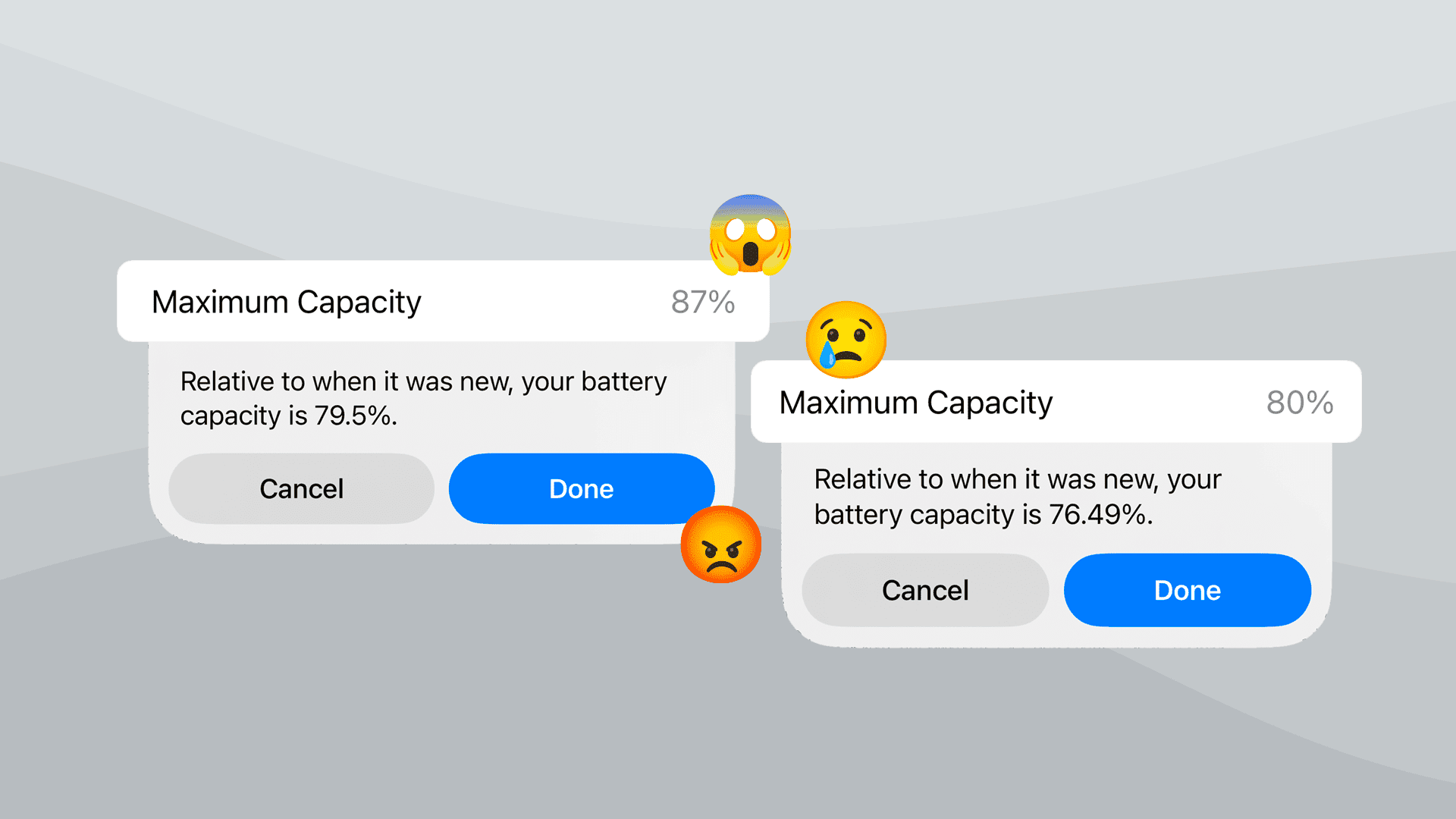
After over 33 months of daily use, I started noticing that the battery is not as good as it used to be. With the built-in Battery Health feature, I can see that it’s at 87% of design capacity. It’s not bad for its age.

However, after the same period with her iPhone 13, my wife began to notice that her phone needed to be plugged in much more often.

Recently, we even noticed that the battery surprisingly jumped from 59% to 61%, only to return to 59% shortly after.

This made me start thinking, so I quickly checked her battery health. From Settings > Battery > Battery Health & Charging, we can see that her health is at 80%.

It’s not a bad result after over 33 months, but also not great from the customer’s point of view, especially when you got AppleCare+ purchased.

According to AppleCare+ terms regarding the battery, you are entitled to have your battery replaced free of charge when it falls below 80%.

Exactly, it states “below” 80%, which currently you may think is not met, as the battery health in settings shows exactly 80%.

But what if that value is inaccurate?

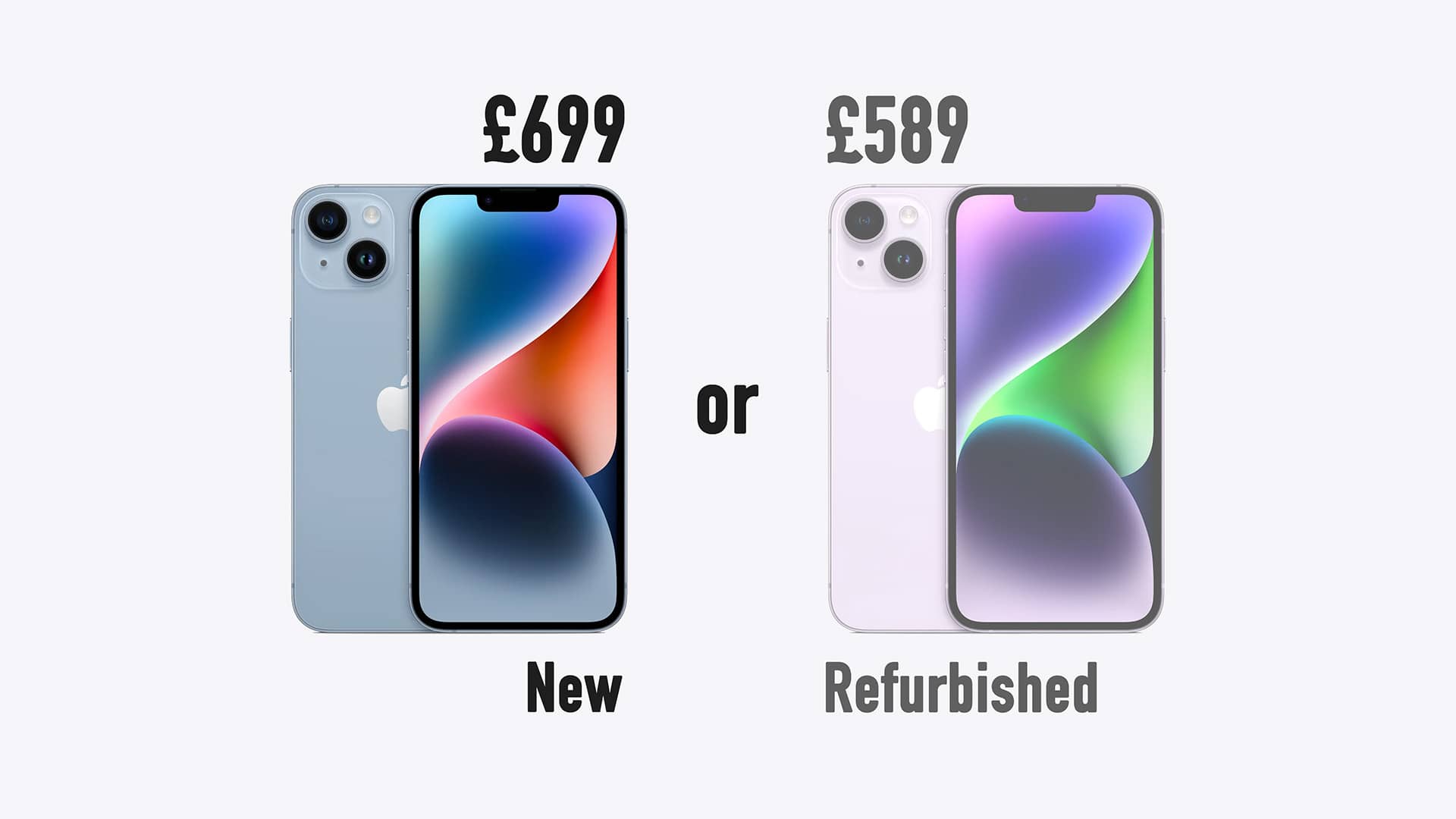
Buying a refurbished Apple product is a great way to save money. I purchased my MacBook Air with an M1 chip through this route back in 2021, and the device is still working well.

The good news when buying refurbished items directly from Apple is that they are treated no differently than new devices in terms of support and service. You are eligible to purchase additional protection through AppleCare, just like with new devices.

The savings on refurbished items, compared to the same item new, can be significant. Of course, you can buy them even cheaper if you don’t mind losing the ability to get extra care for them directly through AppleCare, but if you do mind (like me), then there is one more thing that you should think about before going this route.

It took years for Apple to allow gaming emulators on their platforms.

After a failed start with a fake emulator, it was time for the first one that worked and was not preying on someone else’s intellectual property. However, the creator quickly got scared and withdrew the application from the store. You can understand him to some extent, because in reality, David rarely beats Goliath.

Less than a week later, however, we were able to enjoy the Delta emulator, which remains to this day.

Just a few weeks ago I have been thinking about, what I am doing with my ageing MacBook Air with an M1 chip.

The MacBook Air Air with M1 was introduced in November 2020 but I purchased mine in July 2021, officially from Apple, but from their refurbished store.

I saved a bit on a base model and thanks to that I have been able to take 3 years of Apple Care and still meet my budget.

Despite that nothing happens along the road, so I don’t need to use this plan, I still wonder, if, after these 3 years, I will be able to buy, at least, a year more.

The device working well. I would like to have a bit more internal storage (currently got 256GB base), but apart from that everything working fine. The device is still fast and reliable. For my needs, I don’t see a reason for change.

I have been thinking about a possible upgrade when the MacBook Air is introduced with the M3 chip and that is what happens today (4th March 2024) through press release.

At the same time, Apple decided to discontinue MacBook Air with an M1 chip. Its place, in the same price range, has been offered to a 13-inch MacBook Air with an M2 chip, which is typical.

But what does that mean for users, who use MacBook Air with an M1 chip? Also, what does that mean for people, who just now decide to buy MacBook Air with an M1 chip?

If your daily digital life relies on Google Services, once you become an iPhone owner this may not change. I was a long-term Android user before I changed to the Apple ecosystem.

Even though Apple is offering their equivalent of what Google offers on Android, I never found a better alternative for storing pictures than Google Photos.

Google Photos for most of the typical users is unreplaceable due to the Storage Saver option. Thanks to that we can store all our photos and do not pay too much for the storage. At some point we will need to pay Google to store them, however as they are compressed, they consume less space than storing them in full resolution in, for example, Apple Photo Library.

The first thing that I do when setting up my iPhone is to download the Google Photos app from the App Store. This is what I recommend to my friends who switch from Android to iPhone, however, there is one thing that needs to be remembered.

Categories